
ChartBridge began with a Q1 review.
Growth looked healthy. Retention did not. Between the two, reviewers were still finding and proving chart evidence by hand.
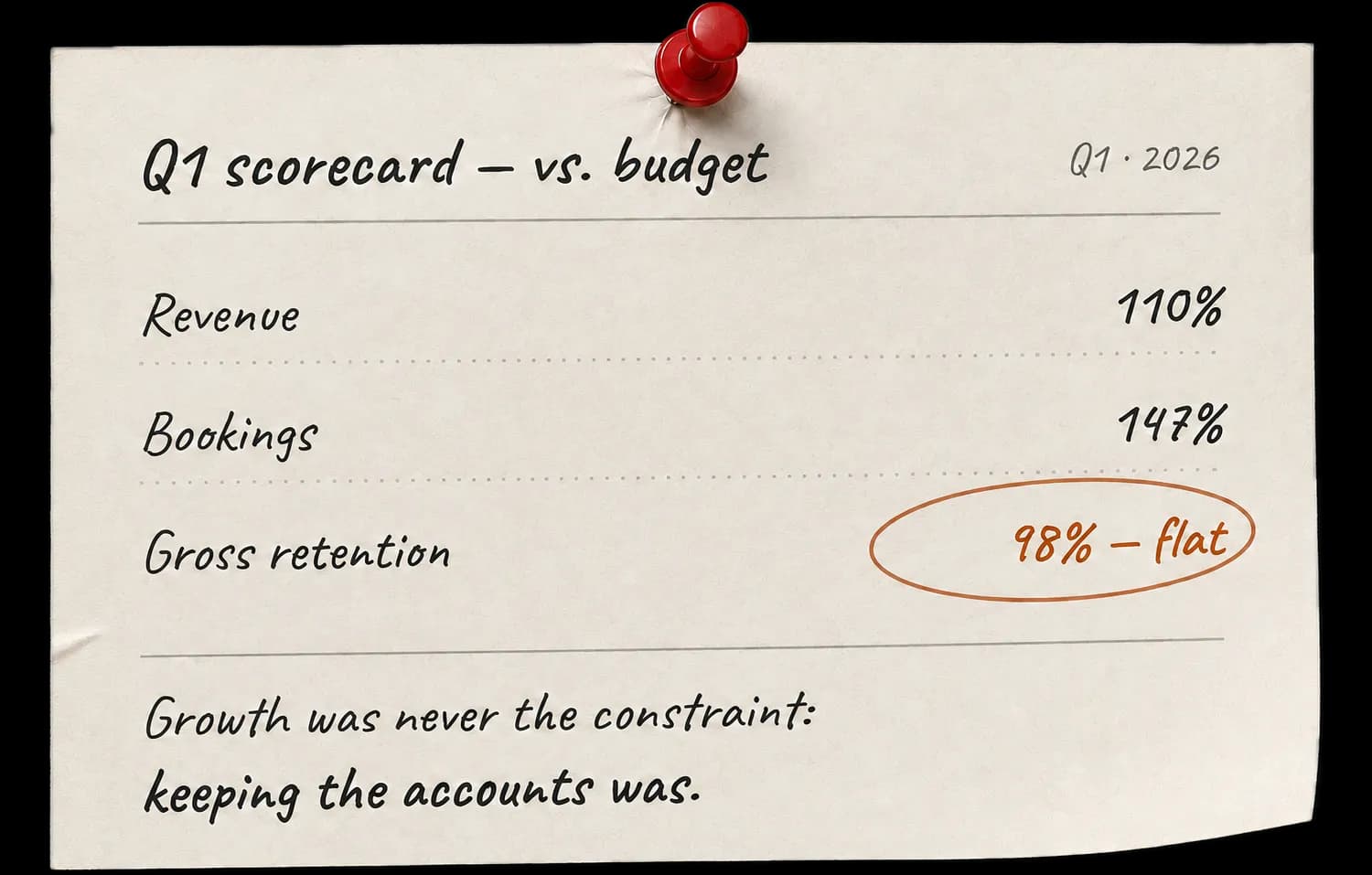
The business was growing. Delivery was slipping.
Revenue was at 110% of budget and bookings at 147%, yet $15 million of annual recurring revenue was exposed across ten accounts able to terminate for convenience. Growth was not the constraint; keeping delivery-sensitive accounts was. The evidence bottleneck had become retention risk.
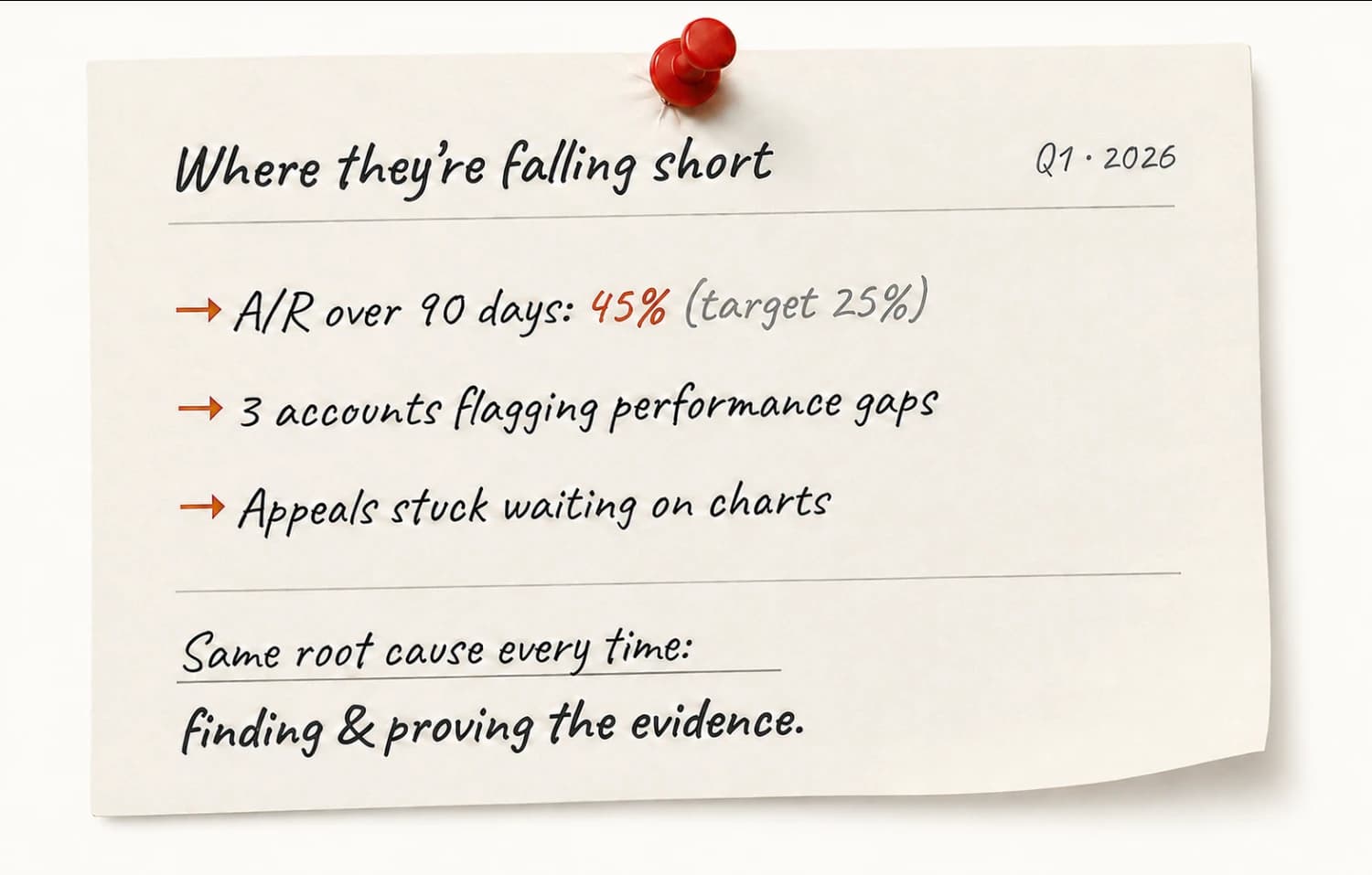
$15M
in annual recurring revenue was exposed Across 10 accounts able to terminate for convenience.
45%
of balances were more than 90 days old The internal target was 25%.
3
accounts were flagging performance gaps Appeals were waiting on charts.
One bottleneck connected every warning.
One reviewer described clinical judgment forming in about fifteen minutes. The hours that follow look nothing like clinical work: searching records that can exceed a thousand pages, verifying each fact in the source, then finding, printing, and merging the supporting documents by hand. The skill that decides the appeal finishes first. The work that delays it takes hours more, and the appeal stays open until it is done.
The answer was not more clinical judgment.
Only one part of the appeal process requires clinical judgment. The rest is retrieval, verification, and assembly.
- 01
Start with the denial
Define what the case must prove before searching the chart.
- 02
Bring the evidence forward
Retrieve and rank the passages that answer that question.
- 03
Keep the reviewer in control
Preserve every source and let the clinician decide what leaves the system.
That operating problem became ChartBridge.
Every hour a reviewer spends on chart search and document assembly is an hour their clinical judgment sits waiting. ChartBridge is built to give that time back to the reviewer who decides the case and the operation that needs the decision sooner.